
Best AI Photo Editor and Face Swap Tools of 2026
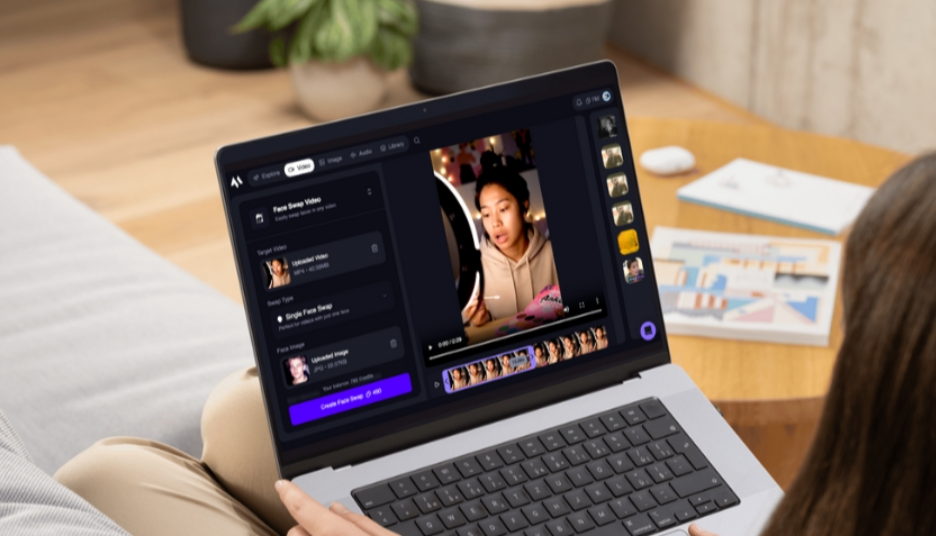
Towards February 2026, the optimal AI photo editor environment has grown beyond filters and other effects. Modern tools merge the concept of generative intelligence and production-ready editing capabilities and enable creators, marketers, and startup teams to create content, iterate on images, and create commercially viable content with fewer steps and tools.
Having tried out weeks and deployed these tools to real workflows, be it ecommerce product shots, social campaigns, concept design, and rapid prototyping, I have narrowed the five best AI photo editors that can genuinely be useful in 2026. Below, each of the entries will contain the strengths, weaknesses, and price, and the situations it will perform best.
Immediate conclusion: There will be one of these tools that will be adapted to your workflow, be it automation, creativity, accuracy, or compatibility with current systems.
Best AI Photo Editors (2026) in a Glance.
| Tool | Use Case | Key Strengths | Platforms | Free Plan |
| Magic Hour | All-around creative editing + multimodal workflows | Unified image + generative + effects + motion | Web | Yes |
| Adobe Firefly | Designer-centric editing | Brand-safe generation + Photoshop integration | Web + Adobe CC | Limited |
| Runway | Creative and cinematic visuals | Combined image + motion tools | Web | Limited |
| Canva AI | Fast social content creation | Templates + ease of use | Web + Mobile | Yes |
| Midjourney | Artistic concept generation | Stylized outputs | Discord | No |
1. Magic Hour
Magic Hour takes the first place in this list due to its capability to combine power and photo editing, along with wider generative and motion opportunities, in a single place.
When you would like to have a tool that will assist you in creating final, but not draft, assets, then Magic Hour is the place to begin. The images you create using it can be extremely precise with its generative editing, which is the cornerstone of any high-level AI photo editor experience. I like the fact that it enables me to pursue higher creative directions without having to sew five other instruments together.
The main editor is shown via its best AI photo editor page.
And when you are described in terms of updating characters or being creative, the face swap tool provides an extra feature of utility to variations of campaigns, creative tests, and persona-inspired imagery.
See also: The Role of AI in Healthcare Technology
Why Magic Hour Matters
The fact that Magic Hour does not compel you to select between generative imaging and pixel-level control is what makes it special. Instead, it blends them. You are able to create a generative base, edit details, modify arrangement, and publish without leaving it to be transferred to a different application.
Pros
Single homework: Workflow Image editing, generative creating and effects within a single place of work.
Quick performance Rapid renders and user interface.
Business grade: Web, mobile and print ready outputs.
Flexible editing: Immediate editing to manual editing.
Multimodal assistance: Operated based on stills, concepts and motion outputs.
Cons
The developing advanced motion tools are not as advanced as specialized video centers.
The heavy creators can be slowed up by limits on free tier usage.
What It’s Best For
When you are looking to have one app that can substitute a number of apps all linked, Magic Hour performs. The time that I spend switching through software was reduced by 30-40 percent after I switched to using it in creating assets of the campaign.
Pricing
Free Plan: Yes, it has simple corrections and prohibits exports to a large extent.
Scales on paid basis: Resolution credits and usage credits on exports.
2. Adobe Firefly
Adobe Firefly is bright when using it in combination with the Creative Cloud ecosystem of Adobe. Firefly generates features like a natural extension to your workflow in case you already rely on Photoshop, Illustrator, or InDesign.
Firefly accentuates commercially licensed generation, which is brand-safe and essential to teams that require clearance and reliability in working with AI to get client work.
Pros
Commercially safe content: Adobe is focused on licensed models.
Intensive Photoshop integration: Supports the current design processes.
Extensive changeable generative fill and textures.
Stability in Adobe users.
Cons
Weaknesses: Less independent power than with Creative Cloud.
Less multimodal: Editing and generation of images.
Subscriptions do not cost anything.
What It’s Best For
Firefly is best suited to the needs of the designer or agency that is more aligned with traditional graphic editing but requires the assistance of modern AI without compromising compliance or accuracy. In creating brand property or polishing design layouts, its Photoshop integration saves a lot of time.
Pricing
Part of the adobe creative cloud.
Generative credit model to use on high volume.
3. Runway.
Runway is a hybrid tool that combines image editing with motion tools of the cinematic scenes, which was initially a visual effects and video creation platform.
In case your imagery ventures frequently into experimental realms – consider animated posters, concept artwork[s] generative, or creative motion cuts – Runway provides the features most AI photo editors are missing.
Pros
Intense generative image and motion.
Good team-work characteristics.
Constant feature additions and support services.
Cons
UI complexity: Prior learning curve of learning compared to mainstream editors
Excessive resources on simple projects: Not all teams require cinematic resources.
Export limits on lower tiers
What It’s Best For
Apply Runway when you are going to work with something larger than pictures. It is popular when teams have to create campaign ideas, motion and variations of ideas in a fast manner.
Pricing
Free plan and restricted exports.
Paid plans increase according to the resolution and export credits.
4. Canva AI
In case speed and convenience are more critical than deep edits, the Canva artificial intelligence editor is one of the best options to creators who need to produce social content, decks, or other rapid creations.
Canva is a team-friendly AI-assisted editing app paired with a massive library of templates, so it is one of the most affordable tools when no one needs deep pixel editing.
Pros
Fast, intuitive interface
Huge template ecosystem
Online team work and notes.
Mobile + web support
Cons
Little deep editing manipulations.
Outputs can feel templated
Weaker than specialist editors Generative controls.
What It’s Best For
Canva should be used in case of any urgent social posts, lightweight thumbnails, and presentations. It will not substitute a professional photo editor to do precision work but it accomplishes daily work in a short time.
Pricing
Free Version: Yes – considerable number of features.
5. Midjourney
Midjourney is not a conventional photo editor with the meaning of sliders and layers. Rather, it is a master of creative and artistic image productions. Midjourney provides outputs with a distinct flavour should you require ideation that is not traditional photography such as stylised concepts, mood boards, or artistic properties.
It is not the best to make a complete photo editing platform to create the campaign but the results of its creativity make it a useful tool of ideation.
Pros
Breathtaking artistic creation.
Active creative community
Fast iteration via prompts
Cons
Some find discord-based workflow to be clumsy.
No structured editing tools
Output consistency varies
What It’s Best For
Apply Midjourney during the pre-creation stage – to brainstorm, find concepts and ideas and spirits that you will develop elsewhere.
Pricing
None has a free plan, only subscriptions.
How I Chose These Tools
The actual best opportunities were defined by going through five real world workflows with each platform:
Preparation of product image using ecommerce.
Cycles of social media creativity.
Ad thumbnail development and optimization.
Ideation campaign deck concepts.
Commercial deadlines Fast turn around jobs.
Across these, I evaluated:
- Output realism and fidelity
- Check and accuracy of amendments.
- Speed of iteration
- User usability and training.
- Transparency and predictability of pricing.
- Commercial appropriateness.
My criteria were tools that assist creators in shipment of work, and not tools that create good demos.
I was also inclined to practical testing, as opposed to vendor assertions. Likewise, I developed the same ecommerce product set in various tools to determine actual differences in quality of control and outcome.
AI Photo Editing Trends in 2026
By the time we get to 2026, the space will be characterized by three distinct trends:
The New Standard of Multimodal Workflows.
There is more than just the images that can be supported by the most useful tools now. They facilitate the gap between generation, editing, and motion – lessening creative cycle friction.
Business Agility is Vital.
Agencies and brands are also asking to be provided with licensed and compliant outputs. Commercial data source-related tools (such as Adobe Firefly) are also positioning themselves to fulfill this need.
Teamwork Characteristics Matter.
Processes are becoming more inter-team. Commenting, version management, and collaborative resource tools (such as Canva and Runway) are really useful at the level of individual production.
Final Takeaway
This is how it is possible to match tools to your needs:
Best overall: Magic Hour – to edit and to be creative at the same time
Best in professional design: Adobe Firefly.
Best to move and cinematic ideas: Runway.
Better at fast and daily material: Canva AI.
Best in artistic generation and ideation: Midjourney.
All the tools mentioned above can be found in a typical toolkit of a contemporary creator but very few of them will actually help to accelerate your workflows without compromising the quality.
I would recommend you to freeze two or three platforms using your real assets prior to committing to a subscription. Speed and quality are more important than hype.
FAQ
The question is what would make an AI photo editor the best in 2026?
The best tools comprise a generative intelligence, a precision editing, commercial grade results, and speed. They minimize the manual processes and assist in real publishing processes.
Are machine learning photograph editors applicable to commercial use?
Yes, however, look at the terms of licensing your checks. Such tools as Adobe Firefly focus on brand-safe and commercially licensed data, which is a major concern of agencies and teams.
Are these tools capable of substituting conventional editors such as the Photoshop?
For many tasks — yes. Nevertheless, advanced layered editing and fine-tuning layout can also be improved with Photoshop.
Are any of these tools motion output capable?
Yes – applications such as Magic Hour and Runway can be configured to support motion or image to motion results, allowing more creative results.
Is there any free AI photo editor that is worth using?
Yes. Some of the tools mentioned above have free plans with capabilities that can be used, such as Magic Hour and Canva.


